"Celebrity Death Match" isn’t just a title—it’s a warning label. The fifth episode of The Boys Season 5 doesn’t just escalate the war between heroes and the corrupt systems that created them; it weaponizes celebrity culture itself. In a world where image is power and trauma is content, this episode masterfully dissects how Vought manipulates public perception while the real battle rages beneath the surface.
No longer content with covert ops or political maneuvering, Season 5 Episode 5 thrusts both Supes and vigilantes into a spectacle designed for consumption. The fallout from previous betrayals, the unraveling of Homelander’s control, and the emergence of a new underground resistance movement all collide in a single, explosive narrative arc.
The Anatomy of a Media Bloodbath
The episode opens with a viral clip: a masked figure—later revealed to be a rogue Supe dubbed “Ravage”—tearing through a Vought-sponsored charity gala in Miami. The footage is grainy, amateur, clearly filmed on a phone. Within minutes, it’s shared, memed, and monetized across every platform.
This is the new battlefield: not in the streets, but in the algorithm.
Ravage, a former Vought experiment gone rogue, isn’t just attacking Supes—he’s attacking the idea of them. His targets? C-list heroes like A-Train (now on the decline) and newer, more marketable figures like Blue Hawk and Firecracker. But what makes this different is the framing. Vought doesn’t respond with force. They respond with content.
Within hours, #CelebDeathMatch trends globally. News channels rebrand the attacks as “fan-led showdowns.” Talk shows debate who “deserved it.” Merch drops featuring Ragave’s mask sell out in minutes. The violence isn’t condemned—it’s commodified.
This is The Boys at its most incisive: a world where moral outrage is a branding opportunity, and real suffering becomes a viral loop.
Homelander’s Crisis of Control
While the world watches the spectacle, Homelander is losing his grip.
Once the undisputed face of Vought, he now finds himself sidelined—both by internal politics and his own unraveling psyche. In "Celebrity Death Match," we see Homelander not as a dictator, but as a man increasingly aware he’s being replaced. The board discusses “rebranding strategies” without him. His speeches are edited for “tone.” Even his son, Ryan, begins questioning his motives.
The episode’s most chilling scene takes place in Homelander’s private suite. Alone, he watches the Ragave footage on loop. Not with anger—but envy.
“He doesn’t care what they think,” Homelander mutters. “He just is.”
It’s a rare moment of vulnerability. For the first time, Homelander seems to recognize that his power has always been contingent on approval—on being loved. Ragave, in contrast, thrives on fear. He doesn’t need endorsement. He demands attention.
This psychological shift is critical. Homelander isn’t just fighting rivals—he’s fighting irrelevance.
Butcher’s Moral Descent Meanwhile, Billy Butcher is spiraling.
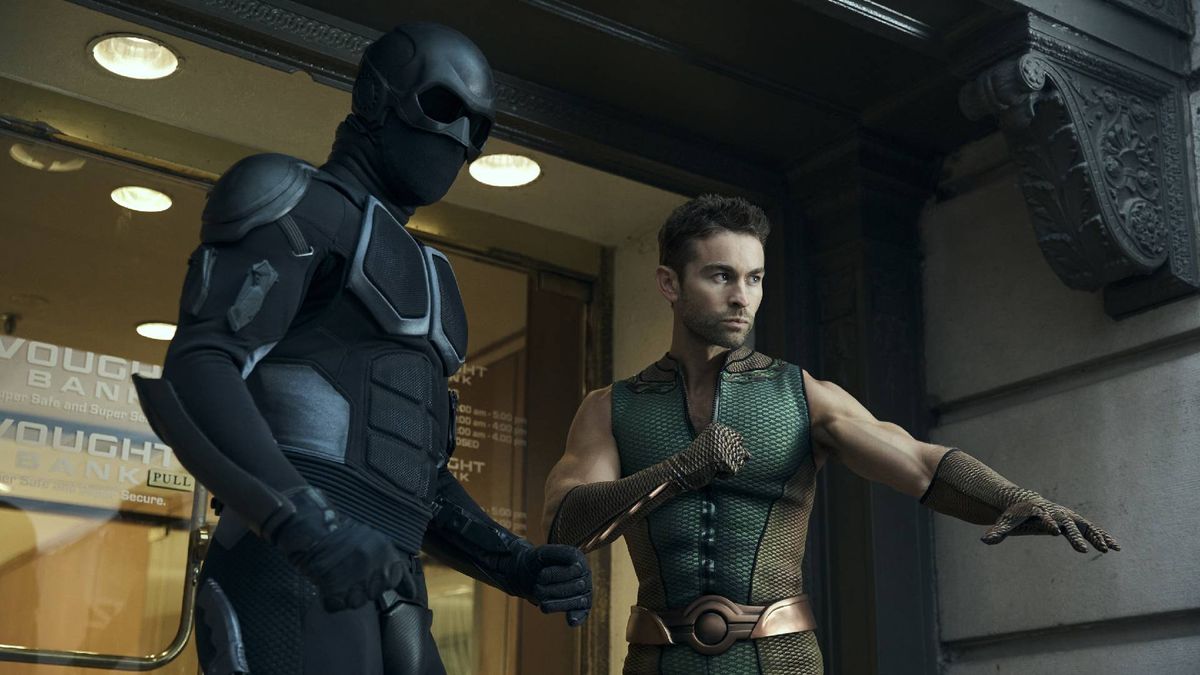
Still reeling from his betrayal of Hughie and the loss of his team’s trust, Butcher takes matters into his own hands. Using intel from a disavowed CIA contact, he tracks down the lab where Ragave was enhanced. What he finds isn’t just another Compound-V facility—it’s a black-site prison housing dozens of failed Supe experiments.
Among them: a woman named Lana, a former actress subjected to forced enhancement trials after refusing a Vought endorsement deal. Her body is deformed, her mind fractured—but she’s alive. And she remembers everything.
Butcher frees her, but not out of compassion. He sees her as a weapon.
In a tense exchange, he asks: “You wanna make ‘em pay?” She replies: “I wanna make them watch.”
This is Butcher at his most dangerous—not when he’s angry, but when he’s calculating. He’s no longer fighting to save the world. He’s fighting to burn it down.
Hughie and the Cost of Idealism
Hughie, now officially off the team, tries to live a normal life. He gets a job at a nonprofit advocating for Supe accountability. He dates Annie. He attends therapy.
It doesn’t last.
When news of the Miami attacks breaks, Hughie recognizes the pattern: the delivery method of the Compound-V variant used on Ragave matches one developed by the same scientist who enhanced him. He tries to warn the authorities. No one listens.
Then, a message from Frenchie: “They’re coming for you next.”
Hughie’s arc in this episode is a quiet tragedy. He wants to believe in systems, in justice, in change. But the world keeps reminding him: the only language Vought understands is violence.
He returns to the fight not because he wants to—but because he can’t look away.
The Rise of the Underground Supe Resistance
"Ravage" isn’t alone.
Throughout the episode, scattered clues point to a larger network: encrypted forums, black-market V sales, and a growing number of Supes defecting from Vought contracts. In a pivotal montage, we see former heroes—some disfigured, others disillusioned—forming cells in cities across the U.S.
One scene, set in a Detroit warehouse, shows three former Vought Junior-Detroits staging a training drill. They’re not fighting for fame. They’re fighting for survival.
This underground movement changes everything. The Boys were always a reactive force—a team cleaning up Vought’s messes. Now, there’s a decentralized, ideologically driven resistance. And unlike Butcher’s crew, they’re not waiting to be recruited.
They’re already at war.
Vought’s PR Machine in Overdrive
No episode of The Boys is complete without a masterclass in corporate manipulation—and "Celebrity Death Match" delivers.
Vought’s response to the chaos is not damage control. It’s brand expansion.
They launch “SupeSafe,” a subscription app that offers real-time alerts on “rogue Supe activity,” paired with sponsored content from endorsed heroes. Firecracker hosts a live stream where she “reacts” to the attacks, all while promoting her new energy drink. Even A-Train, once a top-tier Supe, is repackaged as a “redemption arc” docuseries subject.
The satire is razor-sharp. Vought doesn’t care about public safety. They care about engagement. The more chaos, the more data, the more profit.
And the public? They eat it up.
Key Moments That Redefine the Season
Several scenes in "Celebrity Death Match" shift the entire trajectory of Season 5:
- The Miami Gala Attack: Ragave’s first public strike sets the tone for the season’s central conflict—authentic rage vs. manufactured heroism.
- Butcher’s Recruitment of Lana: This marks a turning point in his character—an embrace of total war.
- Homelander’s Solitude Scene: A rare glimpse into his insecurity, foreshadowing a potential breakdown or power grab.
- The Detroit Resistance Cell: Confirms the existence of a broader movement, raising stakes beyond The Boys’ personal mission.
- Hughie’s Reluctant Return: Suggests that even those who walk away can’t escape the cycle of violence.
Each moment isn’t just plot progression—it’s thematic reinforcement. Power corrupts. Trauma sells. And the line between hero and monster is editorial.
What This Means for the Final Episodes
"Celebrity Death Match" isn’t just a standout episode—it’s a pivot.
The war is no longer between two sides. It’s a three-way free-for-all:
- Vought, clinging to control through media manipulation.
- The Boys (and allies), fractured but regrouping.
- The Underground Supe Resistance, unpredictable and unbound by morality.
Homelander, once the apex predator, is now just another player in a game he no longer fully understands. And Butcher? He might win the war—but lose whatever humanity he had left.
The real question isn’t who will survive. It’s who will get to tell the story.
Final Thoughts: The Cost of Watching
"Celebrity Death Match" forces viewers to confront their own complicity. We laugh at the satire. We share the memes. We binge the chaos.
But the episode asks: What are we becoming by watching?
In a meta sense, The Boys has become the very thing it critiques—a blockbuster spectacle dissecting blockbuster culture. Yet, in this episode, it transcends irony. It doesn’t just mock celebrity violence. It mourns it.
This isn’t entertainment. It’s a warning.
If you’re still watching, ask yourself: Are you a witness—or a participant?
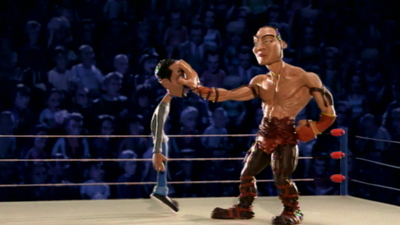
FAQ What is the significance of the title “Celebrity Death Match”? It references both the literal battles between Supes and the media’s framing of violence as entertainment, echoing the infamous MTV show that turned cartoon fights into pop culture.
Is Ragave a new character or a known Supe? Ravage is a new Supe introduced in Season 5, created from a black-site experiment. He represents the consequences of Vought’s unchecked human trials.
Why is Homelander so affected by Ragave? Homelander sees Ragave as a purer version of himself—one unburdened by the need for love or approval. This challenges his self-image and sense of power.
What happens to Hughie at the end of the episode? Hughie reconnects with Frenchie and appears to rejoin the fight, realizing systemic change is impossible without direct action.
Is the Detroit Supe resistance connected to The Boys? Not directly—yet. But their emergence suggests a larger uprising that The Boys may eventually align with or oppose.
Does Butcher’s actions put the team at risk? Yes. By recruiting Lana and operating alone, Butcher risks exposure, internal conflict, and moral overreach that could alienate allies.
How does this episode critique social media? It shows how real violence is flattened into content, with public outrage and grief monetized instantly by corporations and influencers.
FAQ
What should you look for in The Boys Season 5 Episode 5 Recap: Celebrity Death Match? Focus on relevance, practical value, and how well the solution matches real user intent.
Is The Boys Season 5 Episode 5 Recap: Celebrity Death Match suitable for beginners? That depends on the workflow, but a clear step-by-step approach usually makes it easier to start.
How do you compare options around The Boys Season 5 Episode 5 Recap: Celebrity Death Match? Compare features, trust signals, limitations, pricing, and ease of implementation.
What mistakes should you avoid? Avoid generic choices, weak validation, and decisions based only on marketing claims.
What is the next best step? Shortlist the most relevant options, validate them quickly, and refine from real-world results.