
Jack Whitehall doesn’t just tell jokes—he dissects reality with a scalpel wrapped in sarcasm. When he says, “I’m sure wherever my dad is, he’s looking down on us. He’s not dead, just very…”, he’s not just delivering a punchline. He’s revealing layers of truth about family, honesty, and the absurdity of modern social performance.
This single quote, often shared as a “quote of the day,” cuts deeper than most motivational platitudes. It's funny, yes—but it’s also a masterclass in emotional intelligence disguised as stand-up. In dissecting this line, we uncover insights on authenticity in work culture, the courage of honest communication, and the contradictions inherent in human behavior.
Let’s break down why this seemingly throwaway joke resonates so widely—and what real-world value it holds beyond the laugh.
The Genius of Misdirection: Comedy as Truth-Telling
Jack Whitehall’s humor thrives on contrast. The setup—“I’m sure wherever my dad is, he’s looking down on us”—is a familiar, almost clichéd expression used in eulogies and sentimental moments. It evokes reverence, loss, and nostalgia. But then comes the twist: “He’s not dead, just very…”
In that pause, Whitehall weaponizes expectation. The audience braces for a punchline about laziness, disapproval, or poor parenting—but the real impact lies in the implication: his father is present, yet emotionally or physically distant.
This comedic structure mirrors real-life conversations where we mask discomfort with humor. Think of the employee who jokes, “My boss is basically invisible,” during a team meeting. Or the partner who says, “We’re great at communicating—mostly through passive-aggressive texts.” The joke isn’t just funny—it’s diagnostic.
Practical takeaway: In both personal and professional settings, humor often surfaces where honesty is too risky. Recognizing these moments can help identify underlying issues before they escalate.
Honesty in Layers: The British Understatement
Whitehall is a product of British culture, where directness is often softened by irony, self-deprecation, and understatement. His quote doesn’t say, “My dad ignores me” or “He’s emotionally unavailable.” Instead, it cloaks vulnerability in absurdity.
This reflects a broader cultural tendency—especially in UK work environments—to avoid confrontation through wit. A manager might say, “Well, that presentation was… ambitious,” when they mean it was a disaster. The feedback is delivered, but buffered.
But there’s danger in over-relying on this style. When humor becomes a substitute for clarity, miscommunication follows. Teams start speaking in winks and nods, and accountability dissolves.
Common mistake: Equating politeness with professionalism. Many workplaces confuse a “civil” tone with effective communication. In reality, avoiding hard truths—even under the guise of humor—erodes trust.
Workplace application: Use Whitehall’s quote as a trigger for reflection. When someone makes a joke about disengagement (“Our CEO? Oh, he’s basically a myth”), treat it as a signal. Ask: What are we really saying here? And why aren’t we saying it directly?
Work Culture and the "Present but Absent" Leader
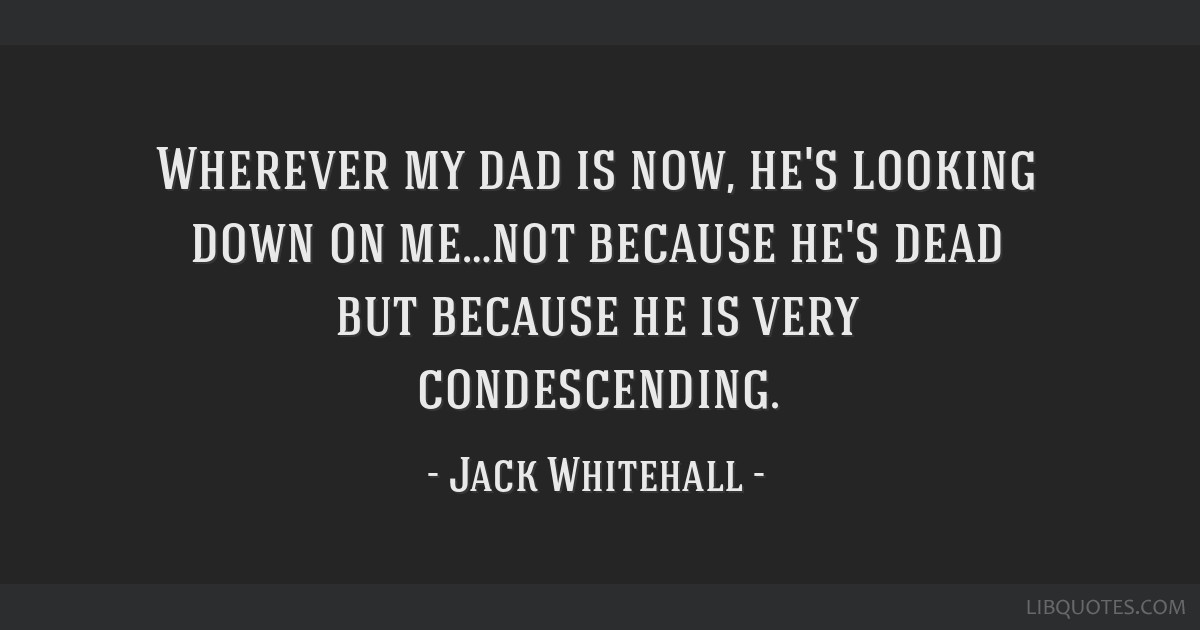
The phrase “He’s not dead, just very…” is a perfect metaphor for leadership in modern organizations. How many managers are physically present but emotionally checked out? How many executives are “looking down” from corner offices without engaging with their teams?
This disconnection damages morale, innovation, and retention. A 2023 Gallup study found that employees who feel emotionally disconnected from leadership are 67% more likely to seek new jobs within a year.
Whitehall’s dad—distant, observing, uninvolved—mirrors the archetype of the inaccessible leader. He’s there, technically. But he’s not contributing, connecting, or correcting.
Realistic use case: A tech startup founder who attends every meeting but spends the entire time on their phone. Team members joke, “Oh, he’s just ‘mentoring from a distance,’” but resentment builds. The humor masks disillusionment.
Actionable insight: If your team is making jokes about leadership presence, it’s time for a culture audit. Implement regular check-ins, anonymous feedback loops, and structured visibility (e.g., weekly office hours). Replace passive observation with active engagement.
Human Nature and the Illusion of Connection
Why do we laugh at Whitehall’s quote? Because we recognize it. We’ve all had relationships—familial, romantic, professional—where someone is physically present but emotionally absent.
This taps into a core truth about human nature: we crave authenticity, but we tolerate performance. We accept the nod, the vague reply, the joke in place of real dialogue—because confrontation is uncomfortable.
But performance is exhausting. Maintaining the façade of involvement, whether as a parent, partner, or manager, requires constant energy. Eventually, the mask slips. The jokes pile up. The distance becomes undeniable.
Psychological insight: Cognitive dissonance theory explains why we laugh at painful truths. Humor allows us to acknowledge discomfort without having to resolve it. Whitehall’s audience laughs because it hurts.
Workflow tip: In team retrospectives or personal relationships, replace humor-as-defense with humor-as-bridge. Instead of sarcastic jabs (“Great job… again”), try self-aware, constructive humor: “I think we just recreated last month’s chaos. Who’s got the map this time?”
The Duality of Jack Whitehall’s Persona
Whitehall’s relationship with his father, Michael, is central to his comedy—and public image. Their travel documentaries (like Jack Whitehall: Travels with My Father) humanize the joke. What begins as satire evolves into a genuine exploration of generational gaps, emotional repression, and reconciliation.
In these shows, the punchline transforms. “He’s not dead, just very…” becomes less about mockery and more about mutual understanding. Michael isn’t indifferent—he’s awkward, reserved, shaped by a different era’s norms.
This duality—joke and journey—reflects a deeper lesson: honesty isn’t just about speaking truth. It’s about evolving through it.
Example: A leader who once joked about their boss’s absence might later reflect: “Maybe he wasn’t disengaged. Maybe he just didn’t know how to connect.” Growth begins when we move from ridicule to empathy.
Why This Quote Resonates as "Quote of the Day"
Daily quotes often lean toward inspiration: “Believe in yourself” or “Success is failure reversed.” But Whitehall’s line stands out because it’s not aspirational—it’s observational.
It works as a “quote of the day” because: - It’s memorable—short, rhythmic, and surprising - It’s relatable—everyone knows someone who’s “not dead, just very…” - It invites reflection—laughter followed by, “Wait… is that me?”
Unlike generic affirmations, this quote doesn’t tell you to feel better. It asks you to see better.
Use case in content strategy: Brands and creators can leverage this style—witty, self-aware, grounded—to build authentic engagement. A company newsletter might open with: “We’re not late with updates. We’re just… strategically delayed.” The humor disarms, then opens the door for real messaging.
Turning Comedy into Cultural Change
Organizations obsessed with “culture fit” often miss the point. Culture isn’t about shared hobbies or office perks. It’s about how people speak when no one’s officially listening.
If your team’s watercooler talk is full of Whitehall-style quips—“Oh, Sarah’s around… somewhere,” or “The budget? It’s alive, technically”—you’re not hearing jokes. You’re hearing data.
- Action plan for leaders:
- Map the humor: Track recurring sarcastic or exaggerated phrases in meetings and messages.
- Trace the root: Ask, “What truth is this joke protecting?”
- Replace evasion with clarity: Normalize direct, kind communication.
- Model vulnerability: Share your own “not dead, just very…” moments to break the ice.
When honesty is welcomed, the jokes don’t disappear—they evolve. They become lighter, celebratory, inclusive. The goal isn’t to kill humor. It’s to free it from the burden of hiding pain.
Final Thought: Laugh, Then Listen
Jack Whitehall’s quote isn’t just comedy. It’s a cultural mirror. It shows us how we avoid difficult truths, how we use humor as armor, and how presence doesn’t always mean participation.
The next time you hear someone say, “He’s not dead, just very…”, don’t just laugh. Ask: - Who is this about? - What are they really saying? - And how can I show up in a way that makes the joke unnecessary?
Because the best leadership, parenting, and partnership isn’t about being physically there. It’s about being present.
Start today. Replace one joke about absence with one act of real connection.
FAQ
What is Jack Whitehall’s most famous quote? While he has many memorable lines, “I’m sure wherever my dad is, he’s looking down on us. He’s not dead, just very…” is one of his most widely shared, especially in discussions about family and humor.
Is Jack Whitehall’s dad actually distant? In reality, Jack and his father Michael have grown closer through their travel documentaries, turning initial comedic tension into heartfelt bonding.
How can humor improve workplace culture? When used constructively, humor reduces stress and builds rapport. But when it masks issues—like disengagement—it must be addressed with empathy and clarity.
What does “present but not engaged” mean in leadership? It describes leaders who are physically or technically involved but fail to connect, communicate, or contribute meaningfully to their teams.
Can sarcasm be a sign of deeper issues? Yes. Frequent sarcasm, especially in teams, often signals frustration, disengagement, or fear of direct communication.
How does British humor affect work communication? It often relies on understatement and irony, which can lead to misinterpretation if clarity and intent aren’t prioritized.
What can we learn from Jack Whitehall’s comedy style? His blend of sarcasm and sincerity teaches us to recognize emotional truths beneath the surface—and to use humor not to hide, but to heal.
FAQ
What should you look for in Jack Whitehall's Quote of the Day: Humor, Honesty, and Human Truths? Focus on relevance, practical value, and how well the solution matches real user intent.
Is Jack Whitehall's Quote of the Day: Humor, Honesty, and Human Truths suitable for beginners? That depends on the workflow, but a clear step-by-step approach usually makes it easier to start.
How do you compare options around Jack Whitehall's Quote of the Day: Humor, Honesty, and Human Truths? Compare features, trust signals, limitations, pricing, and ease of implementation.
What mistakes should you avoid? Avoid generic choices, weak validation, and decisions based only on marketing claims.
What is the next best step? Shortlist the most relevant options, validate them quickly, and refine from real-world results.