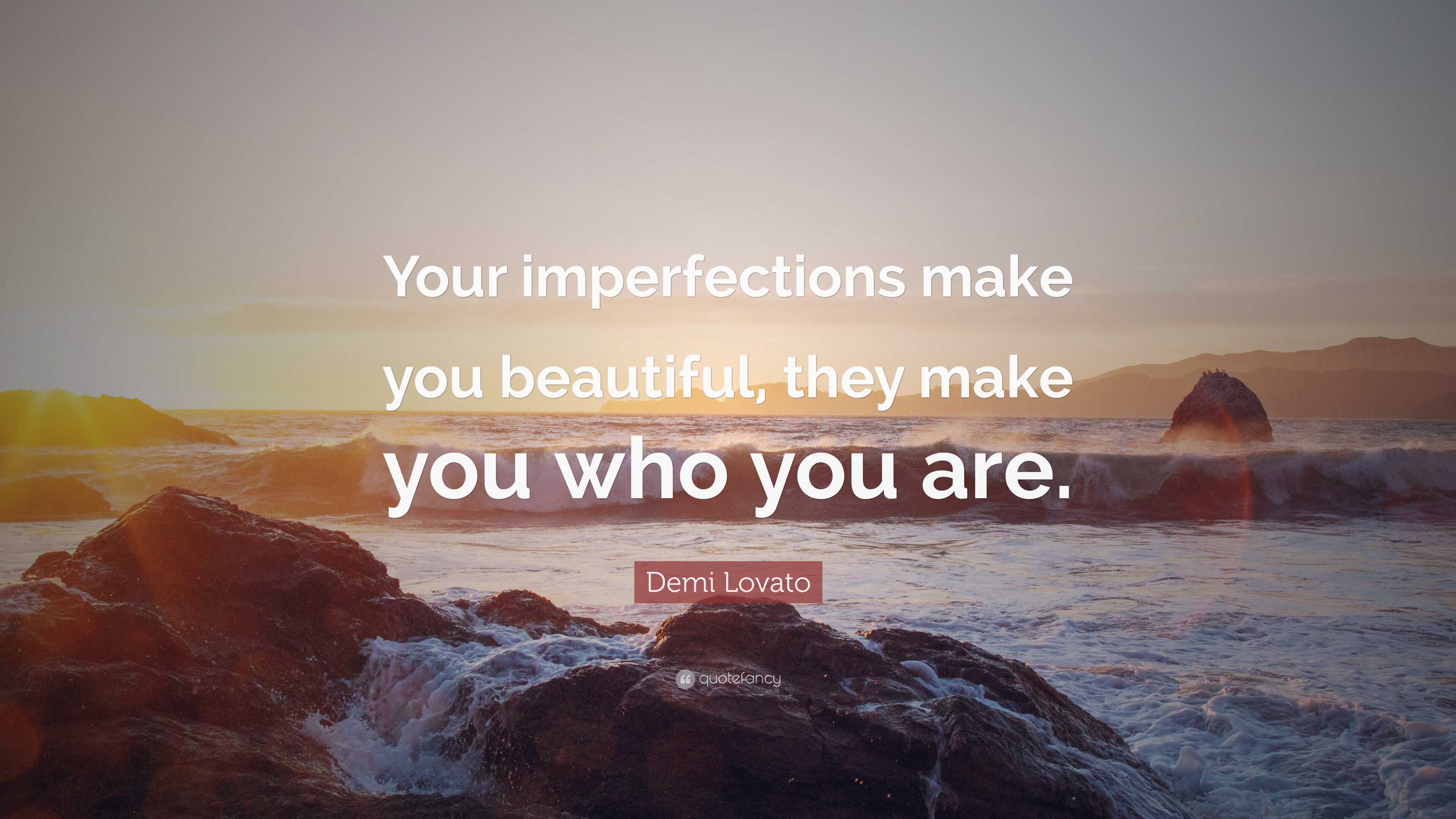
Demi Lovato’s voice cuts through noise—both literally and metaphorically. When she says, “Your imperfections make you beautiful. They make you who you are. So just be yourself, love yourself for who you are,” it’s not just a feel-good slogan. It’s a manifesto for modern survival.
In a world obsessed with filters, facades, and performance—online and off—this quote lands like a wake-up call. It’s not just about appearance. It’s about emotional cracks, past failures, mental health battles, and vulnerabilities we’re taught to hide. Yet, those very things define our depth, our strength, and ultimately, our connection to others.
This isn’t just pop wisdom. It’s a roadmap to resilience, authenticity, and lasting happiness.
The Hidden Power Behind "Imperfections Make You Beautiful"
On the surface, this line echoes the refrain of Lovato’s 2008 hit “Skyscraper”—a song born from personal pain. But years later, as both artist and advocate, she’s turned that sentiment into a lived philosophy.
Her message flips the script on perfectionism—a cultural epidemic fueled by social media, celebrity culture, and unrealistic standards. We chase flawless skin, ideal bodies, clean résumés, and curated lifestyles. But Lovato reminds us: perfection is not only unattainable—it’s undesirable.
Consider the scar that tells a story. The voice that cracks when you’re emotional. The career pivot after a public setback. These aren’t flaws. They’re signatures.
Real-world example: A young woman recovering from an eating disorder follows influencers promoting “clean eating” and waist training. She feels broken. Then she discovers Lovato’s interviews on body image, recovery, and self-worth. The shift? From self-criticism to self-compassion. From comparison to connection. That’s the power of reframing imperfection as identity.
Why "Just Be Yourself" Is Harder Than It Sounds
“Just be yourself” sounds simple. But in practice, it’s revolutionary.
We’re conditioned to perform. From childhood—“sit still,” “be quiet,” “get good grades”—to adulthood—“dress professionally,” “network strategically,” “optimize your personal brand”—authenticity gets trained out of us.
Lovato’s call to “just be yourself” is radical because it rejects assimilation. It says: Your anxiety doesn’t make you weak. Your trauma doesn’t make you damaged. Your queerness, neurodivergence, or unconventional path doesn’t make you less.
It’s especially powerful coming from someone who’s lived it: diagnosed with bipolar disorder, open about addiction and recovery, non-binary, and unapologetically candid about therapy and setbacks.
Common mistake: People interpret “be yourself” as “express every impulse.” That’s not what Lovato means. It’s not about recklessness. It’s about alignment—living in truth, not fear.
Workflow tip: Each morning, ask: “Am I making today’s decisions based on what I truly value, or what I think others expect?” That small check builds authenticity muscle.
Loving Yourself: Not a Destination, But a Daily Practice
“Love yourself for who you are” isn’t a one-time achievement. It’s a daily rebellion.
For many, self-love feels impossible. You might think: I’ve made too many mistakes. I’m not successful enough. I don’t look right. But Lovato’s journey shows that self-love grows through struggle—not after it.
She’s spoken openly about relapses, hospitalizations, and public scrutiny. Yet, she returns to self-compassion as a non-negotiable.
Practical example: After a professional failure—a rejected pitch, a missed promotion—most people spiral into self-doubt. But practicing self-love means responding with: “I’m disappointed, but I’m still worthy. This doesn’t define me.”
This isn’t toxic positivity. It’s emotional resilience.
Realistic use case: A college student with anxiety starts therapy. She writes Lovato’s quote on her mirror. Each day, she repeats it—not because she believes it yet, but because she’s training her brain to shift from self-attack to self-support. Over months, the belief takes root.
Happiness Isn’t the Absence of Struggle—It’s Built Through It
One of the most misunderstood ideas in modern wellness is that happiness means constant positivity. Lovato’s life refutes that.
Her career has been marked by highs—chart-topping albums, sold-out tours, acting roles—and lows—addiction, hospitalization, public breakdowns. Yet, she continues to speak of joy, purpose, and meaning.
That’s because happiness, in the deepest sense, isn’t the absence of pain. It’s the presence of authenticity and connection.
Human nature craves meaning, not perfection. We resonate with stories of survival, not just success. That’s why Lovato’s influence extends beyond music—into mental health advocacy, LGBTQ+ rights, and recovery communities.
Limitation to acknowledge: This message isn’t a substitute for professional care. Self-love doesn’t cure depression. But it can be a catalyst for seeking help.
Insight: Struggle doesn’t disqualify you from happiness. It often prepares you for it.
Success Redefined: From Fame to Freedom
Lovato’s definition of success has evolved. Early in her career, it was albums, awards, approval. Now, it’s stability, truth, and impact.
In interviews, she’s said things like: “I measure success by how I feel mentally and emotionally—not by chart positions.”
That redefinition is crucial. Because for every person chasing external validation—a promotion, a viral post, a relationship status—the risk is burnout, emptiness, or identity loss.
Comparison moment: - Traditional success: High income, busy schedule, public recognition, private exhaustion - Lovato-inspired success: Boundaries, self-awareness, creative freedom, emotional peace
One is performative. The other is sustainable.
Use case: An entrepreneur pivots from scaling at all costs to building a smaller, values-driven business. She works fewer hours, prioritizes mental health, and feels more fulfilled. She’s not less successful—she’s more aligned.
The Deeper Lesson: Embracing Human Nature, Not Fighting It
At its core, Lovato’s quote is about accepting human nature—not resisting it.
We are not machines. We are emotional, flawed, evolving beings. We need rest, connection, mistakes, and healing. Yet, modern life often treats these needs as weaknesses.
But what if fatigue isn’t laziness? What if tears aren’t failure? What if needing help is strength?
Lovato’s journey—from child star to recovery advocate—shows that true strength lies in surrender, not control.
Example in practice: A man raised to “man up” begins therapy after a panic attack. He shares Lovato’s quote in his journal. For the first time, he allows himself to cry without shame. That moment isn’t weakness—it’s liberation.
This is the quiet revolution: not becoming perfect, but becoming real.
How to Apply This Message in Daily Life
Wisdom without action is just inspiration. Here’s how to live Lovato’s message:
1. Rewrite Your Inner Script Replace “I should be better” with “I’m learning.” Turn self-judgment into curiosity.
2. Celebrate Small Acts of Authenticity Wore the outfit you love, even if it’s “weird”? Spoke up in a meeting despite fear? That’s courage. Acknowledge it.
3. Share Your Story—Selectively Vulnerability builds connection. Tell a friend about a struggle. You’ll likely hear, “Me too.”
4. Limit Comparison Triggers Unfollow social media accounts that make you feel “less than.” Follow voices like Lovato’s that promote self-acceptance.
5. Use the Quote as a Touchstone Write it on a sticky note. Set it as a phone wallpaper. Let it interrupt your self-criticism loop.
The Ripple Effect of One Honest Voice
Demi Lovato didn’t set out to be a mental health icon. But by living publicly—with honesty, setbacks, and comebacks—she became one.
Her quote isn’t just “quote of the day” fluff. It’s a counter-narrative to shame, silence, and perfectionism.
And its impact? Felt in therapy rooms, classrooms, support groups, and quiet moments of self-doubt turned to self-compassion.
Because when someone with fame, talent, and visibility says, “I’m not perfect—and that’s okay,” it gives millions permission to do the same.
Live It, Not Just Quote It
Don’t just save this quote to your notes. Let it change how you move through the world.
Next time you catch yourself hiding a flaw, silencing a feeling, or chasing an impossible standard—pause. Remember: your cracks aren’t breaks. They’re where the light gets in—and where your true self breathes.
Be imperfect. Be real. Be free.
FAQ
What is Demi Lovato’s most famous quote about self-acceptance? One of her most repeated messages is: “Your imperfections make you beautiful. They make you who you are. So just be yourself, love yourself for who you are.” It encapsulates her advocacy for authenticity and mental health.
How has Demi Lovato advocated for mental health? She’s spoken openly about bipolar disorder, addiction, eating disorders, and therapy. She’s launched campaigns, funded treatment programs, and used her platform to normalize conversations around mental health.
Does Demi Lovato identify as non-binary? Yes, in 2021, Demi Lovato came out as non-binary and uses they/them pronouns, further advocating for LGBTQ+ visibility and gender inclusivity.
How can I practice self-love after failure? Start by reframing failure as feedback. Speak to yourself like you would a friend. Focus on effort, not outcome. And seek support—therapy, journaling, or trusted relationships.
Why is embracing imperfection important for success? Perfectionism stifles creativity and risk-taking. Embracing imperfection allows for growth, resilience, and innovation—key traits of sustainable success.
Can vulnerability be a strength? Yes. Vulnerability builds trust, deepens relationships, and fosters courage. It’s not weakness—it’s the foundation of authentic leadership and connection.
How does social media affect self-acceptance? Social media often promotes comparison and curated perfection. Limiting exposure, curating your feed, and practicing digital mindfulness can protect and improve self-acceptance.
FAQ
What should you look for in Demi Lovato's Quote of the Day: Embrace Imperfection, Live Fully? Focus on relevance, practical value, and how well the solution matches real user intent.
Is Demi Lovato's Quote of the Day: Embrace Imperfection, Live Fully suitable for beginners? That depends on the workflow, but a clear step-by-step approach usually makes it easier to start.
How do you compare options around Demi Lovato's Quote of the Day: Embrace Imperfection, Live Fully? Compare features, trust signals, limitations, pricing, and ease of implementation.
What mistakes should you avoid? Avoid generic choices, weak validation, and decisions based only on marketing claims.
What is the next best step? Shortlist the most relevant options, validate them quickly, and refine from real-world results.